


Ready to kick start an OTT streaming platform with us?

 LIMITED OFFER: 1-year free setup for FAST Channels!

English
Choosing an OTT platform for cable operators is different from choosing a streaming platform for a media startup.
Cable operators rarely start from zero. They may already have live channels, subscribers, billing systems, set-top boxes, content agreements, headend infrastructure, and years of operating processes behind the existing TV service. The challenge is to extend that business to Smart TVs, mobile devices, web browsers, and connected-TV devices without creating a second television operation that is difficult to manage.
That changes what “the best OTT platform” actually means.
For cable operators, the right platform should work with what is already in place, support a realistic cable-to-OTT migration path, and give the operator enough control over subscribers, content, infrastructure, and the customer relationship.
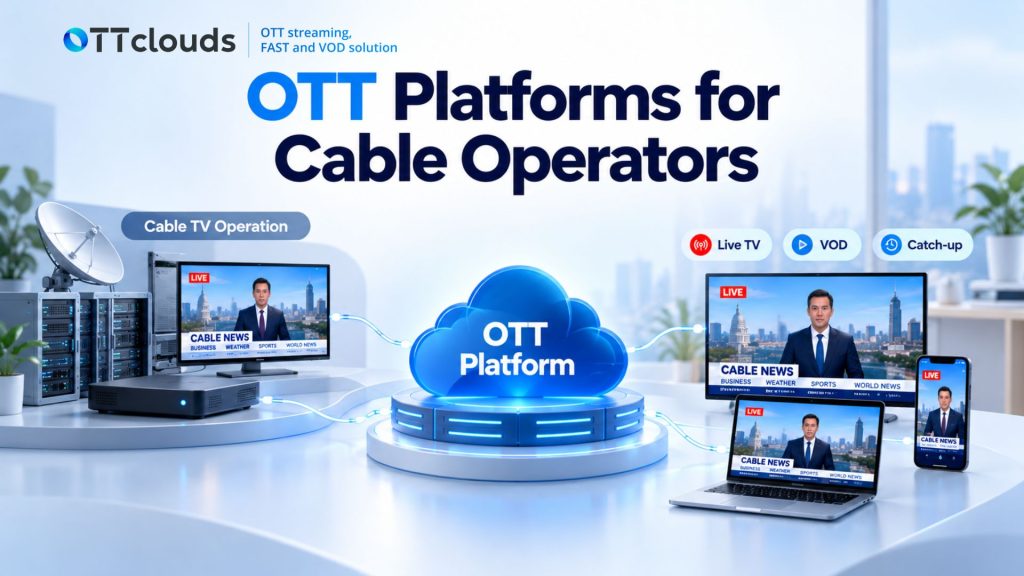
A cable operator needs an OTT platform that extends an existing TV service onto IP-connected screens. It should support live TV and on-demand content while connecting with subscriber, entitlement, billing, and content workflows. For many operators, compatibility with IPTV, STBs, or legacy broadcast infrastructure matters just as much as the OTT apps. The platform therefore needs to function as part of the operator’s television ecosystem, not simply as a video-hosting service.
An OTT platform gives cable operators another distribution path instead of limiting viewing to a television connected through the traditional cable environment.
In a traditional cable setup, the broadcast signal travels through the cable network to a set-top box before reaching the viewer’s television.
With an OTT-enabled service, the same or related content can be delivered through an OTT platform to Smart TVs, mobile devices, web browsers, and connected-TV devices.
That makes features such as linear televisions, live channels, VOD, catch-up TV, restart TV, and multi-device viewing possible without requiring every subscriber to consume content through the same hardware.
OTTclouds has seen this problem directly. In one project for a Japanese cable TV provider, the operator wanted to move beyond an STB-dependent experience and offer Android TV and Fire TV applications instead. The work was not simply about moving video into an app. Remote-control navigation, channel discovery, loading speed, familiar EPG behavior, and the viewing habits of existing TV customers all had to be reconsidered.
After demonstrations, feedback included that the app was “lightweight and easy to understand” and that channel switching was approximately twice as fast as on the previous STB experience.
That is a useful distinction. Moving cable TV to OTT is partly an infrastructure project, but it is also a product migration.
Read full the case study: Developing a Modern Android TV & Fire TV App for Japanese Cable TV Providers
An operator-grade OTT platform should integrate with systems the cable company already uses rather than forcing every process into a separate OTT silo.
Depending on the operator, that can include subscriber databases, billing, authentication, entitlements, CRM, EPG data, content rights, channel feeds, STBs, DRM, and existing OSS/BSS systems.
This is one reason integration capabilities should receive more attention than a long feature checklist. If customers must create a second account, customer service has to work across two subscriber databases, or packages need to be configured twice, a technically capable streaming platform can still create a poor operating model.
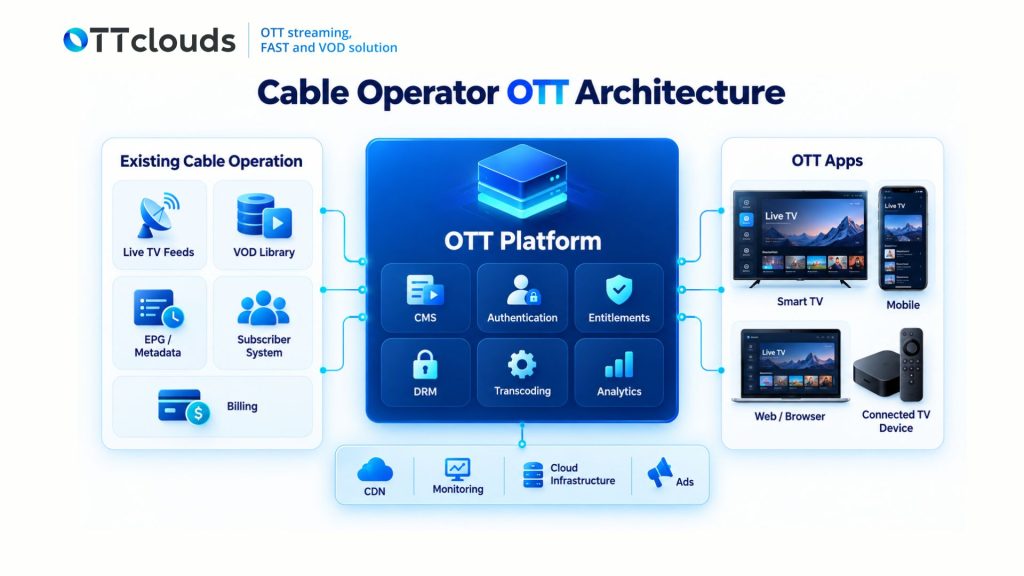
Cable operators are adding IPTV and OTT because viewers watch on more screens than one living room TV, because IP delivery enables features cable struggles with, and because OTT gives operators direct data on how subscribers watch. For most, it is an extension of the existing service, not a replacement.
Modern television viewing no longer begins and ends with the television connected to an operator-provided box.
Subscribers may start a program on a Smart TV, continue on a phone, or watch through a browser while travelling. Cable operators therefore need to think about the service as an account and content experience that follows the viewer, rather than a signal attached to one household device.
This is also why “we have a mobile app” is not enough. For a television provider, the living-room experience remains important. Android TV, Fire TV, Samsung TV, LG TV, Apple TV, Roku, and operator-controlled STBs may all matter depending on the market.
The same shift is happening beyond cable. Traditional TV businesses are increasingly evaluating how an OTT platform for broadcasters can extend live channels, VOD, monetization, and audience relationships across internet-connected screens without abandoning the broadcast operation that already works.
Moving services onto IP makes it easier to add features that are awkward or expensive in a traditional linear environment.
Catch-up TV lets viewers return to recently aired programs. Restart TV allows someone to begin a program after the broadcast has already started. Cloud DVR moves recording away from local hardware. VOD libraries create another way to package existing content.
The useful lesson is not that every cable operator should follow exactly the same sequence. It is that the migration does not have to be a single cutover.
OTT can give operators more visibility into viewing behavior and more control over digital customer experiences than a traditional one-way television service.
That information can support recommendations, promotions, packaging decisions, churn analysis, and advertising strategies. It also opens more room for combinations of subscription, advertising, pay-per-view, FAST, and other models.
OTTclouds’ work with Community Network Center Inc. in Japan is a good example. CNCI was exploring broadcasting DX after seeing specialist-channel subscriptions decline over several years. The PoC explored IP unicast, viewing-data usage, new customer experiences, and revenue models beyond traditional usage fees.
The project turned the service idea into a working Android TV and Fire TV application. The client reported that the PoC was completed in three months, and external feedback helped accelerate discussions toward commercialization.
The strongest providers for cable operators are those that combine streaming capabilities with operator-level integration and migration options. Some are designed around IPTV and legacy-TV modernization, while others put more emphasis on white-label apps or managed operations. There is no useful universal ranking because the right fit depends heavily on the operator’s existing systems. The comparison below focuses on where each platform appears strongest.
| Provider | Best fit | IPTV + OTT | White-label apps | Operator integration | Deployment approach |
| OTTclouds | Custom OTT modernization | Yes / custom integration | Yes | Strong customization focus | Cloud / existing AWS / managed |
| UniqCast | Hybrid DVB, IPTV and OTT | Yes | Yes | Strong | Cloud / operator infrastructure |
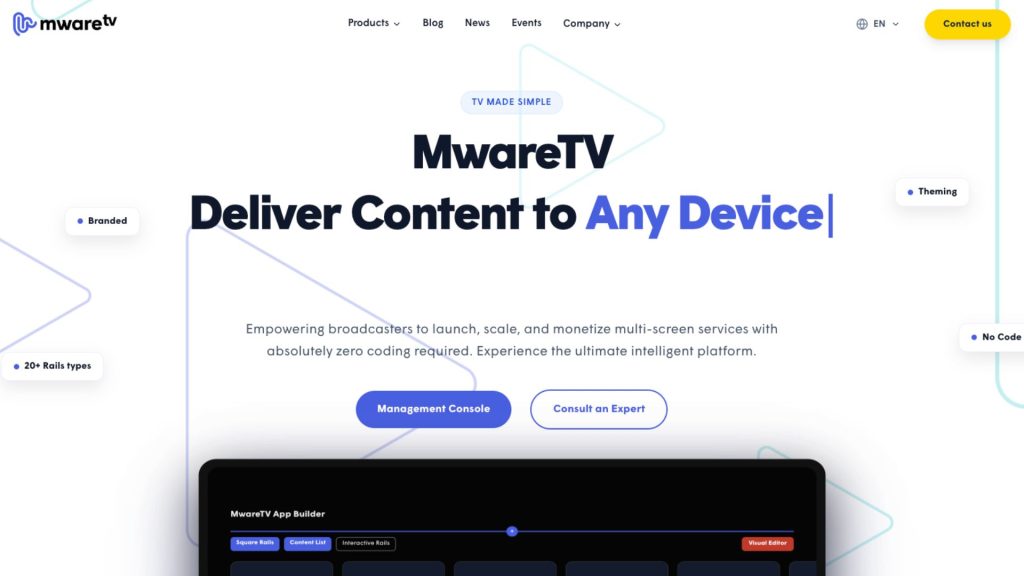
| MwareTV | Cable-to-IP migration | Yes | Yes | Strong | Cloud / hybrid |
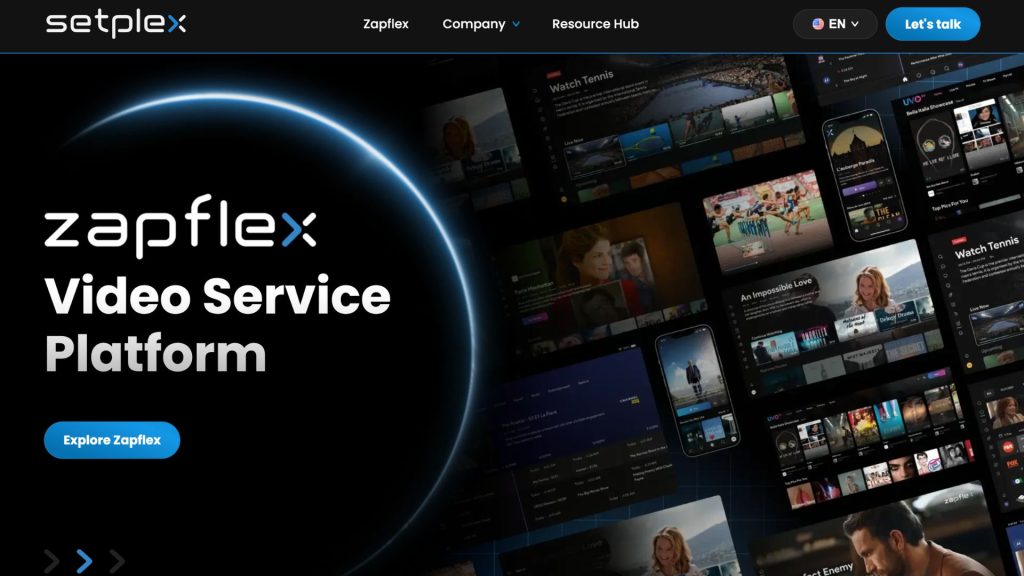
| Setplex | End-to-end streaming operations | Yes | Yes | Strong | Flexible |
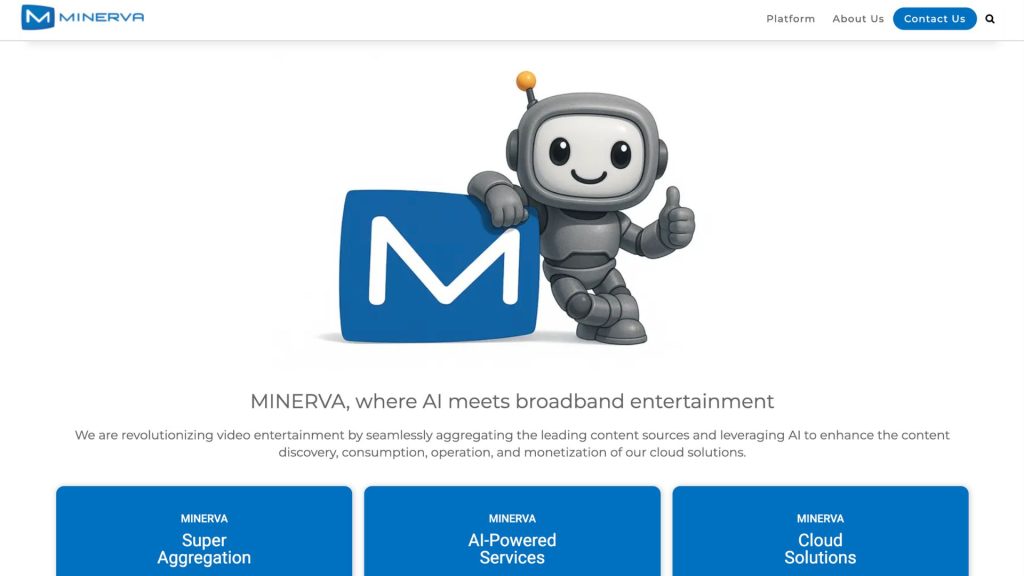
| Minerva | Regional and Tier 2/3 operators | Yes | Yes | Strong | Cloud-native |
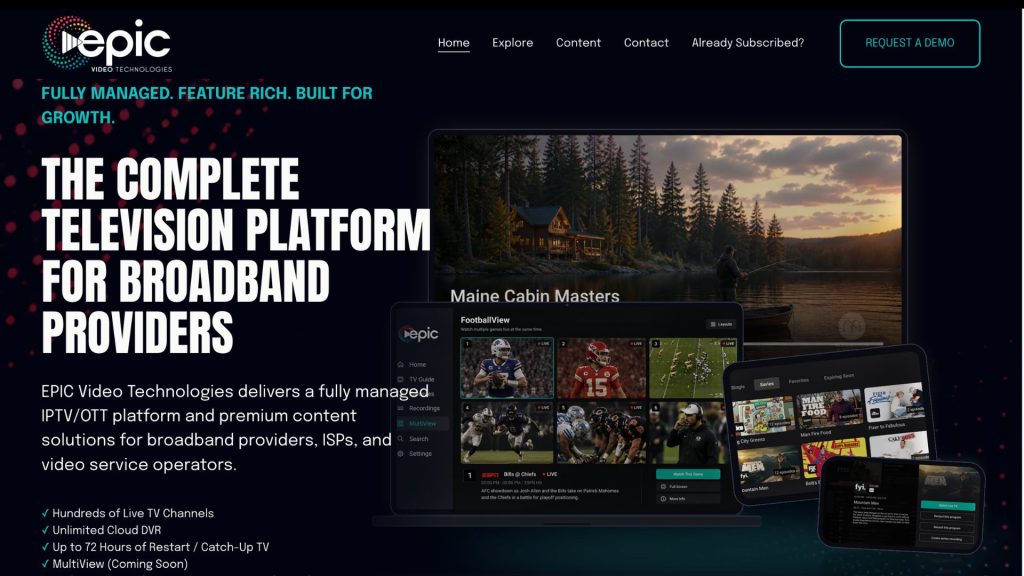
| EPIC Video | Managed TV service | Yes | Yes | Managed approach | Fully managed |
| VPlayed | Customization-heavy deployments | OTT-focused | Yes | APIs and third-party integrations | Cloud / on-premise |
| Cast-TV | ISPs and regional operators | Yes | Yes | Billing/subscriber integration | Cloud / on-premise / hybrid |
OTTclouds suits cable operators that need a customizable OTT environment rather than a fixed application package with limited integration options.
We cover white-label applications, OTT CMS functions, live and VOD delivery, monetization, CDN integration, DRM, custom features, and TV, mobile, and web experiences. Our video streaming infrastructure offering also covers ingest, video transcoding, packaging, CDN delivery, auto-scaling, monitoring, and DevOps workflows on AWS.
For cable operators, the more interesting part is the experience around existing broadcast businesses. OTTclouds has worked on STB-free TV experiences, Android TV and Fire TV development, IP-unicast PoCs, and broadcast-to-OTT migration rather than only greenfield streaming products. For background on the delivery models, see IPTV vs OTT, or our guide to choosing an OTT platform.
Operators serving smaller geographic markets can also look at OTTclouds’ guide to building an OTT platform for regional broadcasters, which covers how existing live channels, archives, regional rights, monetization, and multi-device applications can fit into one OTT strategy.
Best for: operators that need OTT applications and infrastructure adapted around an existing television business.
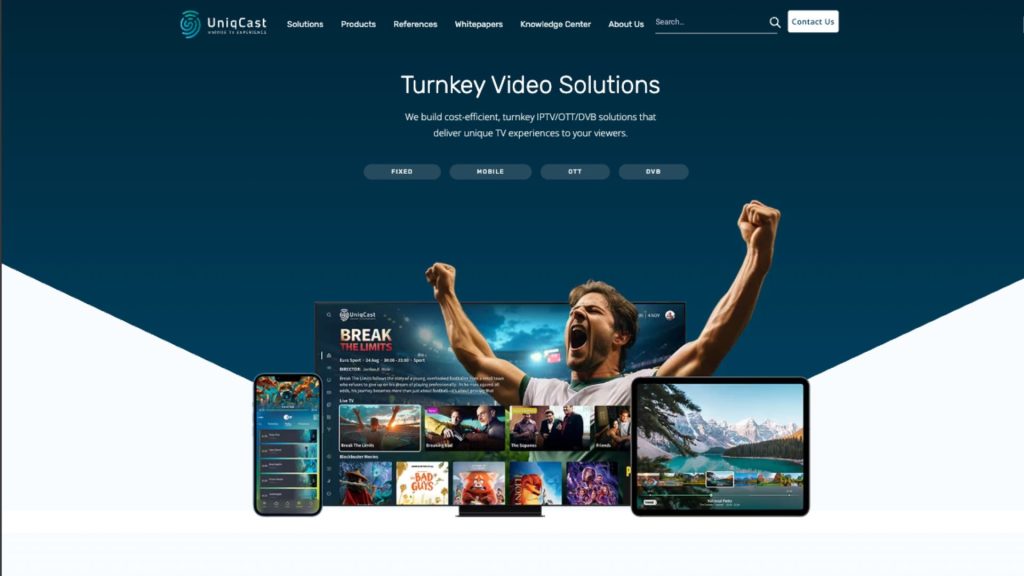
UniqCast is a strong fit when cable, DVB, IPTV, and OTT need to coexist in one broader television environment.
Its uCast platform combines subscriber and content management, streaming/CDN, multiscreen applications, monetization, analytics, device management, and third-party integrations. It also supports hybrid DVB STBs, which can be particularly relevant during a staged transition from broadcast delivery toward OTT.
The platform supports Internet, DVB, and private-IP delivery rather than treating OTT as an isolated distribution channel.
Best for: operators running hybrid environments or consolidating several delivery models into one platform.
MwareTV is particularly relevant to operators whose main question is not “How do we launch OTT?” but “How do we migrate our cable service without starting over?”
Its cable-operator guidance proposes running IPTV alongside QAM first, moving selected services onto IP, and eventually completing the transition when the business is ready. Its middleware covers areas such as authentication, entitlements, billing, DRM, and multiscreen delivery.
That makes the platform worth evaluating when migration sequencing is a larger concern than launching a standalone streaming application.
Best for: cable operators planning a phased cable-to-IP transition.
Setplex is worth considering when the streaming infrastructure itself is a major part of the transformation.
Its operator guidance emphasizes that moving to OTT requires more than an application. Operators need to consider middleware, ABR transcoding, DRM, scalable storage, CDN delivery, billing readiness, and the maturity of the infrastructure they already have.
That infrastructure-first view is useful for larger or technically complex operations where the OTT project affects multiple systems.
Best for: operators evaluating the full video-delivery stack alongside applications.
Minerva is positioned strongly around broadband, cable, and regional operators modernizing their television services.
Its cloud-native IPTV/OTT offering combines subscriber management, content aggregation, and the user experience layer. In July 2026, Minerva and the National Content & Technology Cooperative announced a partnership aimed at independent operators, particularly those transitioning from legacy video environments toward IP delivery.
The platform includes live TV, on-demand content, cloud DVR, catch-up, branded experiences, and multiscreen delivery.
Best for: Tier 2, Tier 3, regional, and independent operators moving toward cloud TV.
EPIC Video Technologies is a stronger fit for providers that would rather buy a managed television service than assemble and operate each OTT component themselves.
Its platform is marketed specifically to broadband providers, ISPs, and video operators and includes live television, cloud DVR, restart/catch-up TV, personalized experiences, and an STB-free delivery model.
A managed model can make sense when the operator wants to offer modern TV without maintaining a large internal video engineering organization.
Best for: regional providers prioritizing simpler ongoing operations.
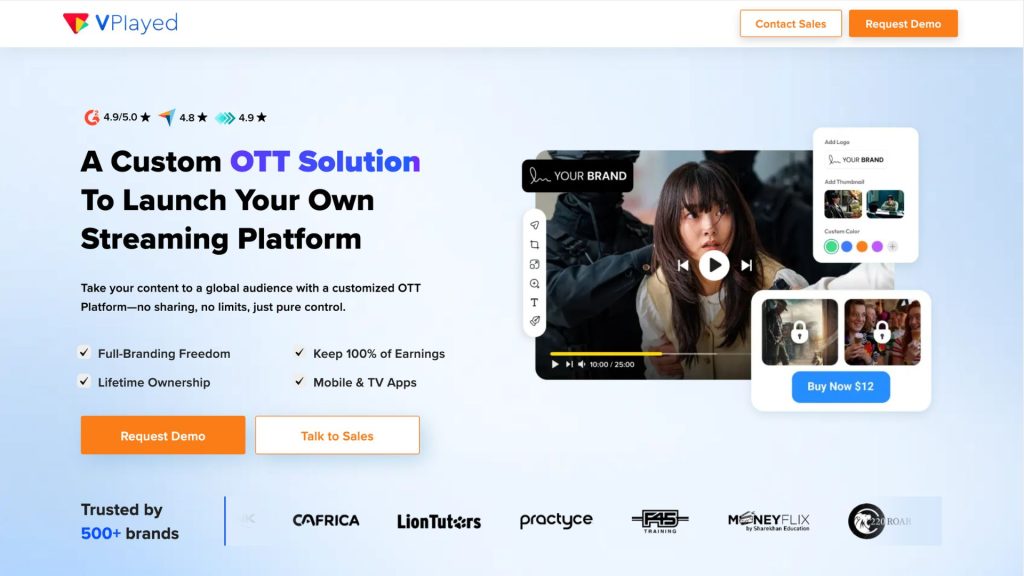
VPlayed is better suited to organizations that put a high value on customization and deployment control.
Its white-label platform supports APIs for authentication, monetization, and content integration, alongside CRM, CDN, and billing integrations. It also offers cloud and on-premise deployment options and supports SVOD, AVOD, TVOD, and hybrid monetization.
It is less explicitly cable-focused than some providers in this list, so operators should examine how much of their existing TV stack would require custom integration.
Best for: customization-heavy OTT projects with specific integration requirements.
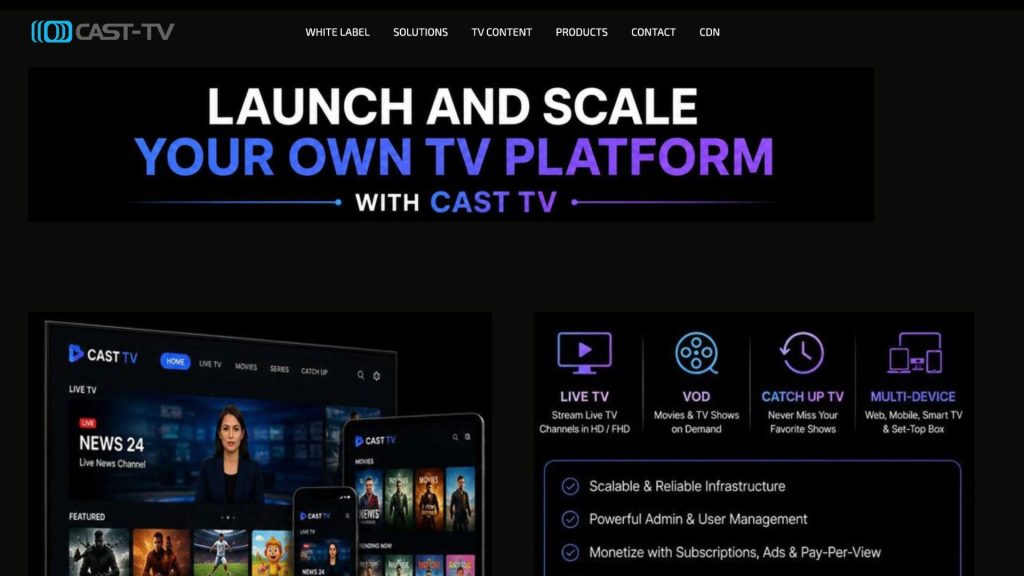
Cast-TV is positioned directly toward telecom operators, ISPs, broadcasters, and service providers looking for a white-label IPTV/OTT stack.
Its offering combines middleware, CDN infrastructure, Smart TV and mobile applications, subscriber management, billing integration, DRM, and CMS capabilities. It supports cloud, on-premise, and hybrid deployment models.
That makes it particularly relevant to smaller and regional operators seeking one vendor for most of the core platform components.
Best for: ISPs and regional operators looking for a turnkey branded television service.
Cable operators should compare platforms against their current television operation, not against the longest vendor feature list. Start with infrastructure compatibility, subscriber systems, live-TV requirements, device coverage, and the desired migration model. Then evaluate streaming, monetization, and operational capabilities around those constraints. A feature is valuable only if it works within the service you actually need to operate.
The first question should be what you can keep. If QAM, DVB-C, IPTV middleware, a headend, or existing STBs still serve part of the subscriber base well, replacing them immediately may have little business value.
Ask vendors whether hybrid operation is supported and which parts of your existing workflow can remain during migration.
Billing integration sounds like a backend detail until a subscriber buys the same package twice or the support team has to check two systems to understand one account. Evaluate authentication, package synchronization, subscription status, entitlement rules, CRM integration, and available APIs early.
For a cable operator, live streaming alone is rarely enough. Look at EPG, catch-up TV, restart TV, cloud DVR, channel switching, time-shift functionality, parental controls, and how the application behaves under remote-control navigation.
Device strategy should follow the audience.
Smart TVs and connected-TV devices can require significantly different UX and development work from web or mobile applications. OTTclouds’ Japanese cable project, for example, treated remote-control navigation and the 10-foot TV experience as core requirements rather than resizing a mobile interface for television.
Ask who owns responsibility when traffic suddenly rises, playback degrades, a CDN route has problems, or an encoder fails.
The platform may need transcoding, adaptive bitrate streaming, DRM, CDN integration, monitoring, failover, auto-scaling, and incident-response processes. OTTclouds’ own infrastructure service treats ingest, transcoding, packaging, CDN delivery, monitoring, and scaling as one connected workflow for this reason.
An operator may begin with a traditional subscription bundle but later add PPV, advertising, FAST channels, or hybrid packages.
Evaluate whether those models can coexist rather than checking whether each appears somewhere on a sales page.
Finally, decide how much your team actually wants to operate.
A SaaS or managed model reduces operational responsibility. A private-cloud, on-premise, or more customizable deployment gives the operator greater control but generally requires more internal capability.
Neither is automatically better.
For most established operators, cable-to-OTT migration does not need to mean replacing the entire television stack at once. A staged approach can introduce OTT applications while the existing cable service continues to operate. More channels and subscriber functions can then move onto IP as technical and business conditions allow. The pace should follow the operator’s infrastructure and customers, not a vendor’s preferred architecture.
A practical migration can happen in several stages.
Stage 1: Existing cable service
The operator continues delivering television through its existing QAM or DVB-C network, with subscribers accessing content through their current set-top boxes and televisions.
Stage 2: Add OTT distribution
The traditional cable service remains active while the operator introduces an OTT platform for Smart TVs, mobile devices, and web users. Subscribers can access the service on more screens without requiring an immediate change to the existing cable infrastructure.
Stage 3: Hybrid IP operation
As the OTT service matures, selected VOD libraries, premium channels, catch-up services, or other features can move onto IP delivery while legacy television services continue where they are still needed.
Stage 4: IP-first television
Over time, the operator can make IP-based delivery the primary model and reduce or retire legacy infrastructure when it makes commercial and technical sense.
For a more detailed planning framework, OTTclouds’ guide to linear TV to OTT migration covers how broadcasters can move content, systems, audience access, rights, and operations toward OTT without treating the project as an overnight replacement of traditional television.
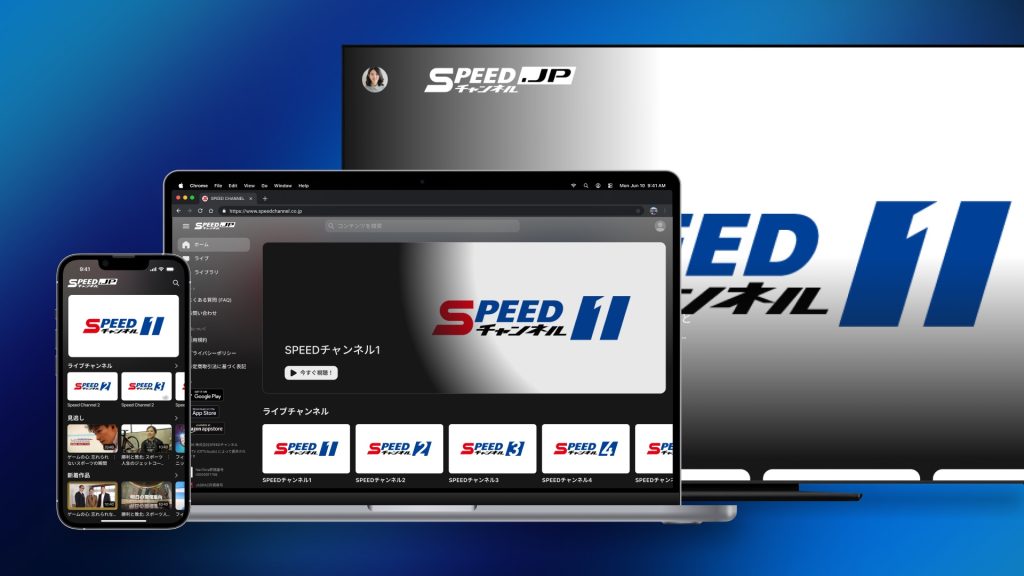
How fast an operator moves depends on its existing infrastructure, subscriber devices, contracts, content rights, broadband availability, capital expenditure and in-house technical capability. Two operators with the same goal can reasonably take different timelines. For another example of how quickly a focused launch can happen, see the SPEED Channel.JP case study, a multi-device service launched in two months.
This approach matters because cable operators already have useful assets. Throwing them away does not make a transformation more modern.
The right OTT platform depends first on what your cable business already operates and what you want to change. An operator migrating gradually has different requirements from one launching a completely new IP service. A company with a large engineering team may want more infrastructure control, while another may prefer managed operations. Define those constraints before turning provider demonstrations into a feature competition.
| If your priority is… | Look for… |
| Gradual cable-to-IP migration | Hybrid IPTV/OTT and legacy coexistence |
| Fast OTT launch | SaaS or managed deployment |
| Existing billing integration | APIs, entitlement and subscriber management |
| Full brand ownership | White-label and customizable applications |
| Strong live TV experience | EPG, catch-up, restart and cloud DVR |
| Multiple revenue models | SVOD, AVOD, PPV and FAST |
| Infrastructure control | Flexible CDN, transcoding and deployment |
| Small video engineering team | Managed operations and support |
A useful vendor discussion should therefore begin with your existing architecture.
What systems need to stay? What problems are subscribers experiencing now? Which screens matter? Which functions genuinely need to move to IP first?
Those answers usually reveal much more than asking which provider has the most features.
An OTT platform for cable operators is a technology environment that lets an operator deliver live and on-demand television over the internet to devices such as Smart TVs, phones, connected-TV devices, and browsers while integrating with the wider television business.
IPTV normally delivers television over a managed IP network controlled by the service provider, while OTT delivers video over the public internet. A cable operator can use both, with IPTV serving managed-network use cases and OTT expanding access beyond that network.
Yes. Hybrid deployments can keep existing QAM, DVB-C, IPTV, or STB services operating while OTT applications are introduced. The operator can then migrate selected services to IP progressively.
Common requirements include live TV, VOD, EPG, catch-up, restart TV, cloud DVR, subscriber management, billing integration, DRM, CDN delivery, multi-device apps, analytics, APIs, and support for the operator’s preferred monetization models.
There is no useful universal price because the major cost drivers vary by project. Subscriber scale, concurrent viewers, device applications, CDN traffic, integrations, DRM, infrastructure, custom development, and operational support can all change the total cost.
A cable operator already has something a new streaming startup does not: customers, channels, infrastructure, content relationships, and an operating history.
The goal of OTT should be to extend those assets, not discard them simply because the delivery technology is changing.
Start with the current service. Decide what should stay, what should connect to OTT, and what genuinely needs to be replaced. Then choose a platform that can support that transition without making the new technology harder to operate than the old one.
For cable operators evaluating that path, OTTclouds can support the OTT layer across TV, mobile and web applications, video streaming infrastructure, cloud/DevOps, CMS, and custom integration while working around the systems that still make sense to keep.
Operators that do not want to build every application and backend component internally may instead start with a white-label OTT platform and customize the parts that differentiate their service.
Explore OTTclouds’ OTT streaming solutions for white-label applications, CMS, VOD, live streaming, FAST, monetization, and video streaming infrastructure.


 Link copied!


